Table Of Content

Provides a simplified interface to a library, a framework, or any other complex set of classes. The Builder Design Pattern finds practical use in creating dynamic forms in software development. It separates the construction of an object from its representation, allowing the same construction process to create different representations. Finally, since the classes would be unusable in a reasonable manner otherwise - we'll leverage the Prototype pattern to mitigate this issue and regain performance. The Prototype Pattern is a Creational Design Pattern used to clone a Prototype Object, which is a superclass defining fundamental properties.
Chain of Responsibility Design Pattern
Now let’s say that there are two more requirements in the project – Store the contents of the Diary in a Database and transfer them to a file. Till now, our interface has exactly implemented the expected features. SRP simply means, a class should have the primary responsibility of the entity and should not take other responsibilities not related to that entity. Well, the option here is to add another elif clause to .__init__() and to .calculate_area() so that you can address the requirements of a square shape. I find these patterns very useful, but this does not mean the other pattern groups are not.
GitHub — AmirLavasani/python-design-patterns: Explore design patterns using Python with code…
By using a factory, we can switch out an implementation with another by simply changing the parameter that was used to decide the original implementation in the first place. In software development, sometimes we're faced with the challenge of distinguishing between the absence of a value and a value that's actually set to None or some other default. Think of an event-driven system, like a GUI toolkit, where different UI components trigger specific actions when interacted with.
Classification
This principle is closely related to the concept of separation of concerns, which suggests that you should split your programs into different sections. Let’s say you have a working method for logging information to a given destination. Your method expects the destination to have a write() method (as every file object has, for example).
With the memento method, you can save and restore the last state of an object without exposing its implementation details. It focuses on capturing and externalizing an object’s internal state without disturbing the code’s encapsulation. The undo and redo options present in various software solutions such as text editors, IDEs, and MS Paint, are an excellent example of the memento method’s implementation. The singleton method ensures that a class has only a single instance and gives a global access point for the same. The most popular design pattern in Python is the Singleton pattern. It is widely used to ensure that a class has only one instance throughout the application.
Step 3: Concrete Builder Classes
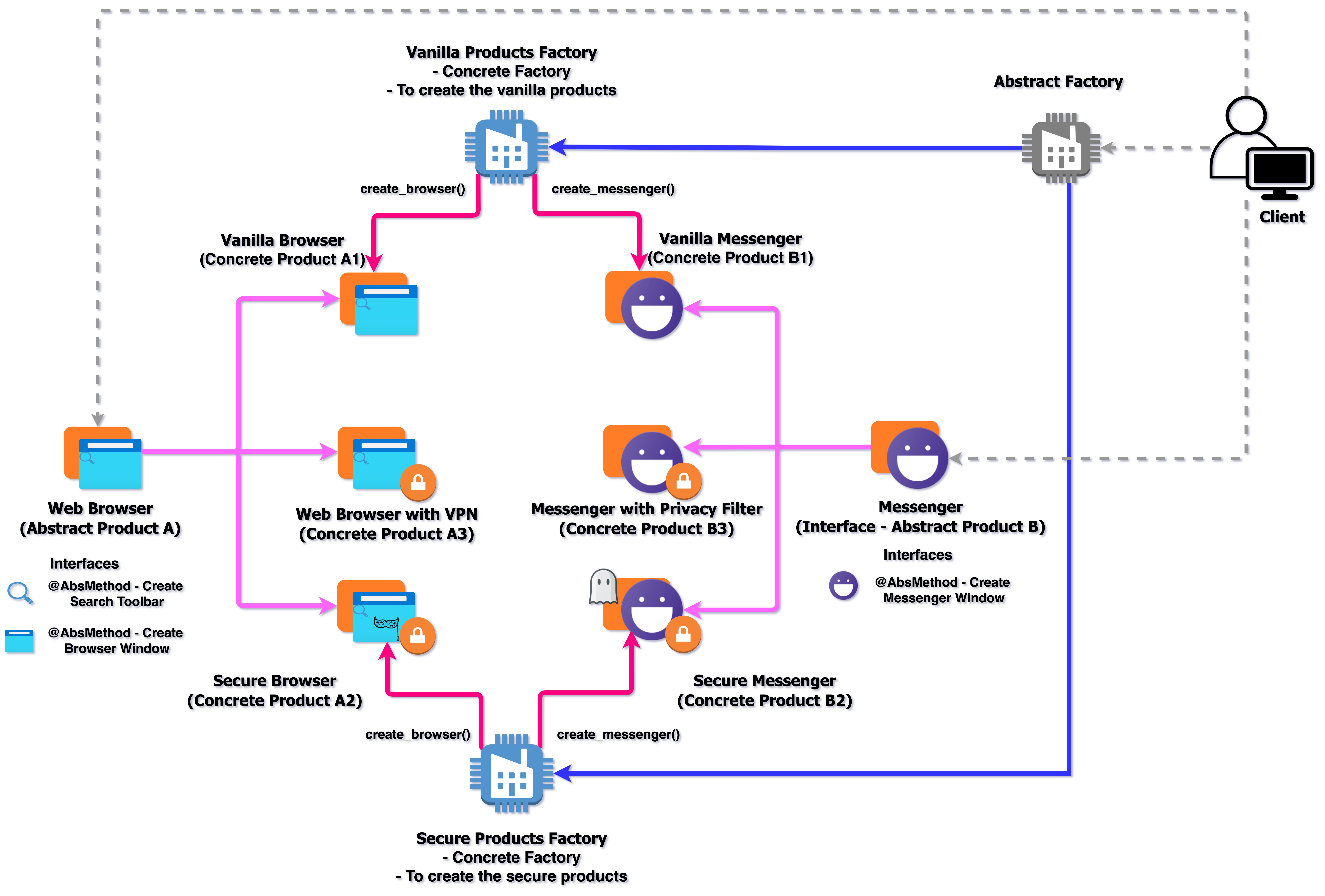
It enables you to isolate certain implementation information and makes it easy to introduce various strategies without requiring you to change the code. Structural design patterns use inheritance to create the necessary interfaces. They also identify the relationships that simplify the structure. The abstract factory method allows you to create families of objects related to each other without giving particular concrete classes. The difference is in the interface that exposes to support creating any type of object.
18 Common Python Anti-Patterns I Wish I Had Known Before - Towards Data Science
18 Common Python Anti-Patterns I Wish I Had Known Before.
Posted: Fri, 13 Aug 2021 20:01:50 GMT [source]
This class provides the required interface (API) for any shape that you’d like to define. That interface consists of a .shape_type attribute and a .calculate_area() method that you must override in all the subclasses. Don’t Repeat Yourself (DRY) and never write code lines longer than 80 characters. And don’t forget to use design patterns where applicable; it’s one of the best ways to learn from others and gain from their wealth of experience free of charge. Decorators are really nice, and we already have them integrated into the language. What I like the most in Python is that using it teaches us to use best practices.
Further Reading on the Toptal Blog:
To understand the complexities of a general purpose solution, let’s take a look at a different problem. Let’s say an application wants to integrate with different music services. These services can be external to the application or internal in order to support a local music collection. The central idea in Factory Method is to provide a separate component with the responsibility to decide which concrete implementation should be used based on some specified parameter. Nevertheless, the code above is hard to maintain because it is doing too much. The single responsibility principle states that a module, a class, or even a method should have a single, well-defined responsibility.
End-to-End Solutions
By creating a unique, unmistakable object that serves as a sentinel, we can differentiate between genuinely absent values and default ones. When developing applications, especially those of considerable complexity, we often find ourselves in scenarios where we need to share an object's state across different parts of the system. While global variables can serve this purpose, they're generally frowned upon due to the complications and unpredictability they can introduce. If software designing follows the Open-Closed Principle and Liskov Substitution Principle, then it will be implicitly aligned to confirm the Dependency Inversion Principle. Low-level classes are the simple workers that perform actions, while high-level classes are the management class that orchestrate the low-level classes. Leodanis is an industrial engineer who loves Python and software development.
Creational Design Patterns deal with creation of classes or objects. They're very useful for lowering levels of dependency and controlling how the user interacts with our classes. Abstract Factories, Builders, and Prototypes can all be implemented as Singletons in certain scenarios, providing unique instances of these design patterns.
Learning them will make it easier for you to tackle various problems and make your code more functional. Design patterns are reusable solutions to common programming problems. They provide a structured approach to designing software applications, making them more scalable, maintainable, and easier to understand. Design patterns help developers write better code by promoting code reusability, modularity, and extensibility. A good solution is to specialize a general purpose implementation to provide an interface that is concrete to the application context.


No comments:
Post a Comment